

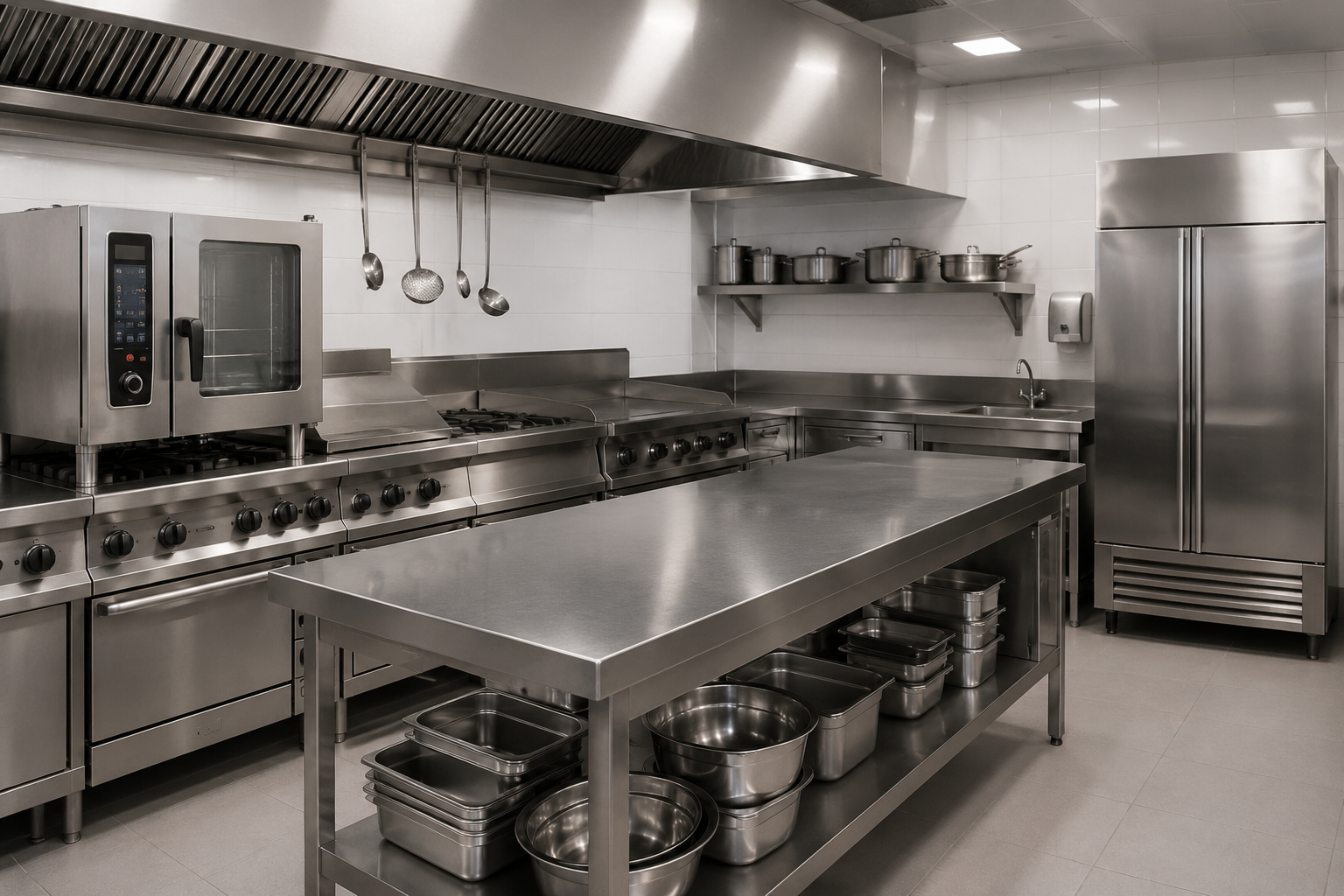
Commercial Kitchen Equipment: 7 Powerful Benefits for Restaurants
Commercial Kitchen Equipment: The Foundation of Every Successful Restaurant
Commercial kitchen equipment plays a crucial role in the success of any restaurant, hotel, catering business, or cloud kitchen. Whether you are launching a new food business or upgrading an existing kitchen, investing in the right commercial kitchen equipment can significantly improve efficiency, food quality, safety, and profitability.
Modern food businesses operate in a highly competitive environment where speed, consistency, and hygiene are essential. The right equipment helps kitchen staff work efficiently while maintaining high standards of food preparation and service.
In this guide, we'll explore the importance of commercial kitchen equipment, the essential equipment every kitchen needs, and how to choose the best solutions for your business.
Table of Contents
- What is Commercial Kitchen Equipment?
- Why Commercial Kitchen Equipment Matters
- Essential Commercial Kitchen Equipment List
- Benefits of Investing in Quality Equipment
- How to Choose the Right Commercial Kitchen Equipment
- Maintenance Tips
- Frequently Asked Questions
- Conclusion
What is Commercial Kitchen Equipment?
Commercial kitchen equipment refers to professional-grade machines, appliances, and tools designed specifically for food preparation, cooking, storage, and cleaning in restaurants, hotels, bakeries, cafeterias, and catering businesses.
Unlike residential appliances, commercial kitchen equipment is built for continuous operation, higher production capacity, and strict hygiene requirements.
Examples include:
- Commercial ovens
- Cooking ranges
- Refrigeration units
- Dough mixers
- Food processors
- Deep fryers
- Stainless steel work tables
- Dishwashing systems
- Storage racks
These equipment solutions are designed to handle large volumes of food while maintaining consistency and operational efficiency.
Why Commercial Kitchen Equipment Matters
A restaurant's success depends heavily on kitchen performance. Efficient equipment allows chefs and kitchen staff to prepare meals quickly without compromising quality.
Improved Productivity
Commercial kitchen equipment enables staff to complete food preparation tasks faster. High-capacity mixers, food processors, and cooking stations reduce manual effort and increase output.
Better Food Quality
Consistency is critical in the food industry. Professional equipment ensures uniform cooking temperatures, accurate measurements, and reliable performance.
Enhanced Food Safety
Maintaining food safety standards is easier with equipment designed for commercial environments. Stainless steel surfaces, proper refrigeration systems, and hygienic food preparation stations help prevent contamination.
Reduced Operational Costs
Energy-efficient commercial kitchen equipment can significantly lower electricity and maintenance expenses over time.
Increased Customer Satisfaction
Faster service, better food quality, and consistent performance contribute to a superior dining experience, encouraging repeat customers.
Essential Commercial Kitchen Equipment List
Every food service establishment requires a core set of equipment.
Commercial Cooking Equipment
Cooking equipment forms the heart of every kitchen.
Popular options include:
- Gas ranges
- Commercial ovens
- Steamers
- Grills
- Deep fryers
- Induction cooktops
These machines help chefs prepare large quantities of food efficiently.
Refrigeration Equipment
Proper refrigeration is essential for preserving food quality and safety.
Common refrigeration solutions include:
- Reach-in refrigerators
- Walk-in cold rooms
- Display chillers
- Freezers
- Undercounter refrigerators
Reliable refrigeration minimizes food waste and ensures compliance with safety regulations.
Food Preparation Equipment
Preparation equipment speeds up kitchen operations and reduces labor costs.
Examples include:
- Vegetable cutters
- Food processors
- Meat grinders
- Dough mixers
- Slicers
- Blenders
These machines help maintain consistency across menu items.
Stainless Steel Equipment
Stainless steel remains the preferred material for commercial kitchens due to its durability and hygienic properties.
Popular stainless steel equipment includes:
- Work tables
- Storage shelves
- Sink units
- Preparation counters
- Trolleys
Cleaning Equipment
Cleanliness is essential for food businesses.
Important cleaning equipment includes:
- Commercial dishwashers
- Hand wash stations
- Grease traps
- Cleaning sinks
- Waste management systems
7 Powerful Benefits of Investing in Quality Commercial Kitchen Equipment
1. Faster Food Preparation
Modern equipment reduces preparation time, allowing businesses to serve more customers during peak hours.
2. Higher Production Capacity
Commercial-grade machinery is designed to handle large volumes efficiently.
3. Improved Consistency
Customers expect the same quality every time they visit. Professional equipment helps maintain consistency across all menu items.
4. Better Energy Efficiency
New-generation equipment consumes less energy while delivering higher performance.
5. Enhanced Workplace Safety
Commercial equipment incorporates safety features that reduce accidents and injuries.
6. Longer Equipment Lifespan
High-quality machines are built to withstand demanding commercial environments.
7. Better Return on Investment
Although initial costs may be higher, durable equipment reduces maintenance expenses and improves long-term profitability.
How to Choose the Right Commercial Kitchen Equipment
Selecting the right equipment requires careful planning.
Assess Your Menu
Your menu determines the type of equipment required.
For example:
- Bakeries need dough mixers and bakery ovens.
- Restaurants need cooking ranges and refrigeration systems.
- Cloud kitchens require compact, high-efficiency equipment.
Consider Kitchen Space
Measure available space before purchasing equipment to ensure proper installation and workflow.
Focus on Quality
Investing in reliable equipment from experienced manufacturers reduces downtime and maintenance costs.
Evaluate Energy Efficiency
Energy-efficient models help lower operating expenses over time.
Plan for Future Growth
Choose equipment that can accommodate increased production as your business expands.
For businesses planning a complete setup, explore our bakery equipment solutions to create an efficient food production environment.
Maintenance Tips for Commercial Kitchen Equipment
Regular maintenance helps maximize performance and lifespan.
Daily Cleaning
Remove food debris and grease after every shift.
Scheduled Inspections
Inspect components regularly to identify wear and tear before major failures occur.
Staff Training
Train employees on proper equipment usage and safety procedures.
Follow Manufacturer Guidelines
Always follow recommended maintenance schedules and operating instructions.
Replace Worn Components
Timely replacement of damaged parts prevents costly breakdowns.
Common Mistakes to Avoid
Many businesses make costly equipment purchasing mistakes.
Avoid:
- Buying equipment solely based on price
- Ignoring energy efficiency ratings
- Choosing equipment without future scalability
- Overlooking maintenance requirements
- Purchasing from unreliable suppliers
A strategic approach ensures better long-term results.
Frequently Asked Questions
What equipment is needed for a commercial kitchen?
A commercial kitchen typically requires cooking equipment, refrigeration systems, food preparation machines, stainless steel workstations, and cleaning equipment.
Why is commercial kitchen equipment important?
Commercial kitchen equipment improves efficiency, food quality, hygiene, safety, and profitability.
How long does commercial kitchen equipment last?
High-quality commercial kitchen equipment can last 10–20 years with proper maintenance.
How can I reduce commercial kitchen operating costs?
Investing in energy-efficient equipment, conducting regular maintenance, and training staff can significantly reduce operating expenses.
What is the best material for commercial kitchen equipment?
Stainless steel is widely preferred because it is durable, corrosion-resistant, and easy to clean.
Conclusion
Commercial kitchen equipment is one of the most important investments for any food service business. From improving productivity and food quality to ensuring safety and long-term profitability, the right equipment can transform kitchen operations.
Whether you're opening a restaurant, expanding a hotel kitchen, or upgrading an existing facility, choosing reliable commercial kitchen equipment will help create a more efficient, productive, and successful food business. By focusing on quality, energy efficiency, and proper maintenance, businesses can maximize their return on investment while delivering exceptional dining experiences to customers.